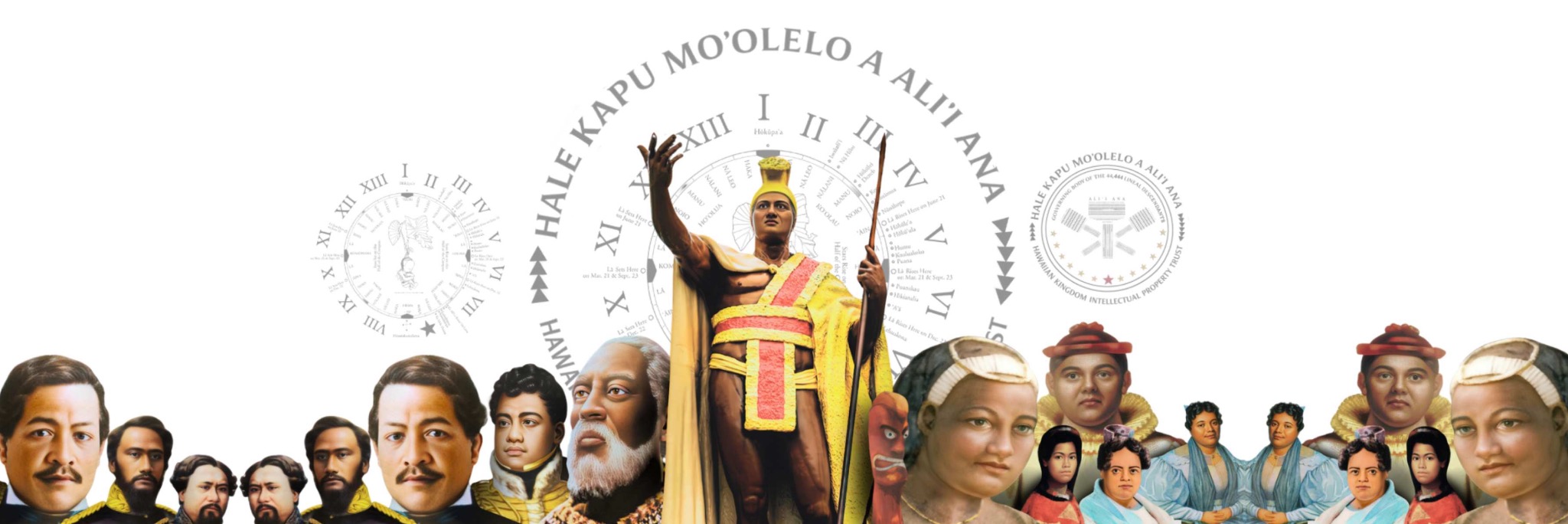
Hale Kapu Mo'olelo a Ali'i Ana — 76-Page Manifesto
SB 3317
How to Make a Multi-Billion Dollar Hawaiian Film Industry in 5 Years & Fix the Film Tax Credit
A bill for an act relating to the development of a Native Hawaiian film and media industry. Prepared for consideration by the Hawai'i State Legislature. Presented to the Lieutenant Governor of Hawai'i, February 2026.
Table of Contents
SB 3317
Executive Summary
This proposal establishes a Native Hawaiian-led, full-cycle film and media industry that keeps production spending, jobs, infrastructure, ownership, and long-term profits in Hawai'i — rather than allowing them to leave the State.
It advances Native Hawaiian economic self-determination consistent with the federal Native Hawaiian governance pathway recognized by the U.S. Department of the Interior in 2016.
The request before the Legislature is limited and fiscally responsible: authorization for only two full-cycle tax-credit pilot productions, $5 million to enable independent Native Hawaiian feature-film production capacity, and governance through the Hale Kapu Mo'olelo a Ali'i Ana Trust with DBEDT oversight.
This is a pilot demonstration, not an open-ended subsidy.
I
The Problem Today
Hawai'i is one of the most filmed locations in the world, yet long-term ownership and profits leave the State. Native Hawaiian culture and stories are widely commercialized without Native ownership or workforce control. Existing film tax credits create temporary production activity — not permanent studios, careers, or cultural equity.
The result: short-term spending enters Hawai'i, then leaves. No permanent industry. No cultural ownership.
The issue is not merely total credit value. It is the number of individual credits issued across numerous productions without ownership retention, infrastructure requirements, long-term capital formation, or local intellectual-property participation. Dozens of separate credits may collectively generate short-term activity while producing no enduring economic asset.
II
The Full-Cycle Solution
Full-cycle production requires the entire filmmaking process to occur in Hawai'i: filming, editing, visual effects, sound, and final delivery. Keeping the full pipeline in-state creates lasting local jobs, permanent production infrastructure, workforce training pathways, and long-term tax revenue.
This transforms Hawai'i from a film location into a film industry.
The proposed tax credit structure allows a performance-based credit of up to approximately 50% of qualified in-state production spending, capped around $40–$50 million per project. This is not upfront state spending. Productions must first spend real money in Hawai'i, hire local workforce, complete full-cycle production in-state, and reinvest into Hawai'i infrastructure and training. Credits may be recaptured if requirements are not met.
III
The Kaka'ako Makai Studio Hub
The Kaka'ako Makai area — home to the Point Panic studio location — is envisioned as the central hub for full-cycle Native Hawaiian film production. Development of this site enables permanent soundstages and production facilities, in-state post-production and visual-effects capacity, workforce training and paid apprenticeship pathways, and long-term creative industry infrastructure on public trust lands.
Regions that successfully converted incentives into multi-billion-dollar creative industries — New Zealand, British Columbia, Georgia — implemented three measurable controls: limited, high-value credit allocation; infrastructure linkage; and mandatory ownership or participation requirements. New Zealand's rise illustrates this clearly. The country's transformation into a global film hub did not occur through incentives alone. It occurred through permanent infrastructure and elite post-production capacity.
IV
Governance and Accountability
The two pilot credits would be governed by Native Hawaiian trust leadership through a voting committee and overseen by DBEDT for legal compliance, fiscal transparency, workforce and reinvestment verification, and alignment with state economic policy. This creates dual accountability: Native Hawaiian governance plus State oversight.
The Hale Kapu Mo'olelo a Ali'i Ana Trust is designed to serve a growing body of Native Hawaiian descendants, with a long-term vision of reaching 44,444 enrolled members connected to the legacy of the Hawaiian Kingdom. A trust of this scale provides democratic cultural representation rather than private ownership, intergenerational stewardship of Native Hawaiian intellectual property and resources, broad economic benefit distribution to Native Hawaiian communities, and a stable governing body capable of managing long-term public-private industry partnerships.
V
Demonstrated Industry Credibility
The trust's creative and production arm, Ali'i Ana Studios, has already achieved milestones unprecedented for a Native Hawaiian independent studio: produced feature-length Native Hawaiian films with Academy Award-level producing partners attached; created films that rank among the most awarded and highest-reviewed Native Hawaiian independent films in history; and secured global marketplace recognition and distribution engagement at the American Film Market — the primary international forum for film financing and sales.
Leadership connected to Ali'i Ana Studios has worked within top-tier global production ecosystems, including experience associated with Warner Bros. and Legendary Entertainment (major studios behind global franchises such as Aquaman and Dune), premium streaming and distribution environments including Netflix and other major international platforms, and high-level visual marketing, production development, and behind-the-scenes work within large-scale studio productions.
Work has also contributed to early-stage creative and production development connected to Native Hawaiian-centered major productions and the growth of Jason Momoa's production ecosystem, including projects such as Chief of War.
VI
The IP Chain of Title Framework
Central to the Trust's commercial model is a rigorous IP Chain of Title and Licensing Framework. Every story, song, chant, film, garment, and piece of visual art created under the Ali'i Ana name is documented in the Trust's Chain of Title registry — establishing clear ownership, licensing history, and revenue attribution.
This framework ensures that: Native Hawaiian cultural content cannot be appropriated without compensation; all licensing revenue flows back to the 44,444 members; and the Trust maintains perpetual ownership of its cultural archive — it licenses, it never sells.
The framework is modeled on the most sophisticated IP management systems in the global entertainment industry, adapted for the specific legal and cultural context of Native Hawaiian sovereignty.
VII
The Hawaiian Disney — Revenue Distribution Model
The long-term vision of Hale Kapu Mo'olelo a Ali'i Ana is the creation of the Hawaiian Disney — a vertically integrated cultural entertainment company owned by and for the Hawaiian people. This means a feature film studio, a fashion house, a music label, a digital archive, a social network, and a cultural marketplace — all under one roof, all owned by the 44,444.
Revenue distribution follows the Trust's constitutional formula: 40% to Cultural Preservation, 30% to the Production Fund, 20% distributed equally among all 44,444 members, and 10% to the Legal Defense and Advocacy Fund.
This is not a charity model. This is an ownership model. The Hawaiian people do not need to be given a seat at the table. They need to own the table.
VIII
Final Policy Conclusion
Old tax credits equal temporary spending that leaves Hawai'i. Full-cycle Native Hawaiian credits equal permanent industry, ownership, and infrastructure in Hawai'i.
This proposal simply asks the Legislature to authorize two governed pilot productions and invest $5 million in Native Hawaiian film capacity. Together, these steps create the first permanent Native Hawaiian-led global film industry based in Hawai'i, benefiting local jobs, cultural ownership, tourism visibility, long-term state revenue, and future generations.
The remaining barrier is not credibility or capability. The remaining barrier is scalable production capital and permanent infrastructure in Hawai'i. This proposal addresses exactly that.
Prepared for consideration by the Hawai'i State Legislature by Hale Kapu Mo'olelo a Ali'i Ana — the Hawaiian Kingdom Intellectual Property Trust.